


After almost 14 years dedicated to the study of fungal associations, Dr. Cristian Atala, scholar from the Biology Institute, reached a fundamental milestone in this scientific trajectory: the awarding, for the first time as a principal investigator, of a Regular Fondecyt project.
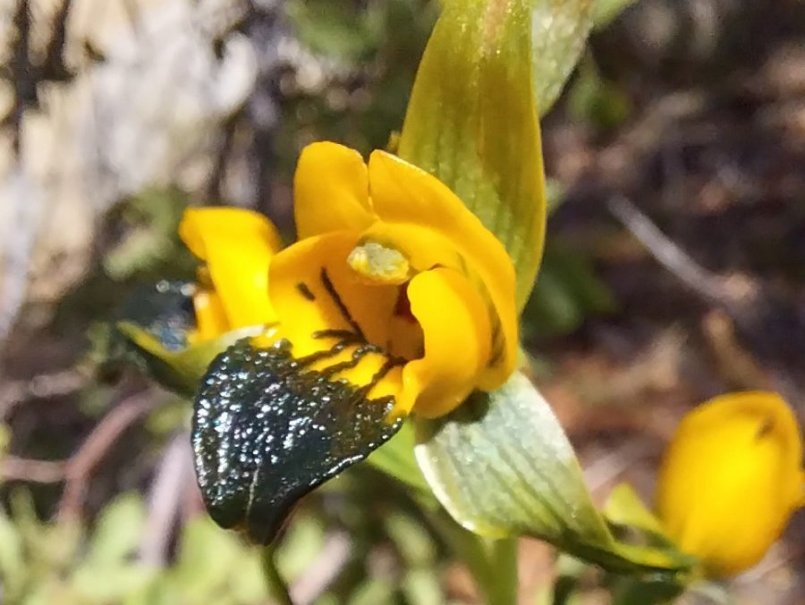
The initiative, titled “Diversity and specificity of mycorrhizal fungi in Chloraea (Orchidaceae), how they can influence the distribution of orchids and their long-term conservation”, represents not only an advance for national biodiversity knowledge, but also an acknowledgement to consistency in the competitive chilean scientific funding system.
“I feel this is an award to perseverance. I have been applying since 2011 and this is the first time I am awarded a Regular Fondecyt as principal researcher. This is a topic I am very interested in, and I am happy there is funding to address it”, Dr. Atala expressed.
A vital underground connection
This study delves into the complex relationship between orchids and mycorrhizal fungi, who establish a symbiosis with the roots of approximately 80% of plants, exchanging essential nutrients such as phosphorus and zinc. Unlike other plants, orchids depend critically on these fungi to germinate since their seeds lack their own reserves.
The team led by Dr. Atala will seek to determine if specificity, this is how selective an orchid is with its fungus partner, is the factor that explains why some species are broadly distributed while others are at risk of becoming extant, such as C.disoides and C. cristata.
The project considers an ambitious field work that will travel throughout the central area of Chile – the center of origin of the Chloraea type – to analyze ground and root samples through molecular biology techniques and laboratory germination experiments.
The initiative seeks to know the diversity of fungi in the central area ground, something that few have studied and that has implications for the conservation and dissemination of native orchids, who depend on these fungi in nature.
Impact in training and conservation
Beyond technical data, the project has a strong Institutional and social impact component, especially in the area of human capital training, since it will allow us to support graduate theses at the Biology Institute, integrating new researchers in topics such as symbiosis and ecology; it also considers conservation and restauration by collecting essential data to protect endangered species; and it also has great ornamental potential, since it opens doors for domestication and dissemination of chilean orchids with decorative purposes, promoting the use of native flora.
For Dr. Atala, this achievement is the result of an institutional support mechanism. “I couldn’t have won this project without the constant support of the Research Department of the university, through the internal projects line and the direction of the Biology Institute, who allowed us to create a database of information and publications”, he stated.
This support, in addition to international collaborations (such as the SPUN project) and the work together with universities of Concepción, La Frontera and Talca, has allowed to consolidate a relevant international research team in orchid biology.
By Juan Paulo Roldán
Strategic Communication Department


