


Transforming CO₂ - one of the main gases responsible for climate change – into formic acid, a molecule causing increasing interest as a clean fuel and industrial raw material, is the goal of a Fondecyt project, led by the School of Biochemical Engineering at the PUCV professor, Carminna Ottone.
The objective of the initiative, called “Next-Generation Bio electrocatalysts for CO₂ Conversion: Integration of Biochar and Reductive Enzymes in a Scalable System” (1261379), is to convert an environmental problem into an energetic opportunity.
The focus aims to leave the residual logic behind in order to move forward towards a circular economic model, in which carbon dioxide becomes a resource with value. “Today, CO₂ is seen as waste. The idea is to change that perspective and transform it in a useful product. If we obtain formic acid through biotechnology, we are talking about clean fuel, with no fossil origin”, the researcher explained.
The heart of the project is a bio-electrocatalytic system that combines biology and electricity to carry out the conversion. The team works with the formate dehydrogenase (FDH), capable of transforming CO₂ in formic acid by receiving electrons from an electrical source.
Biochar
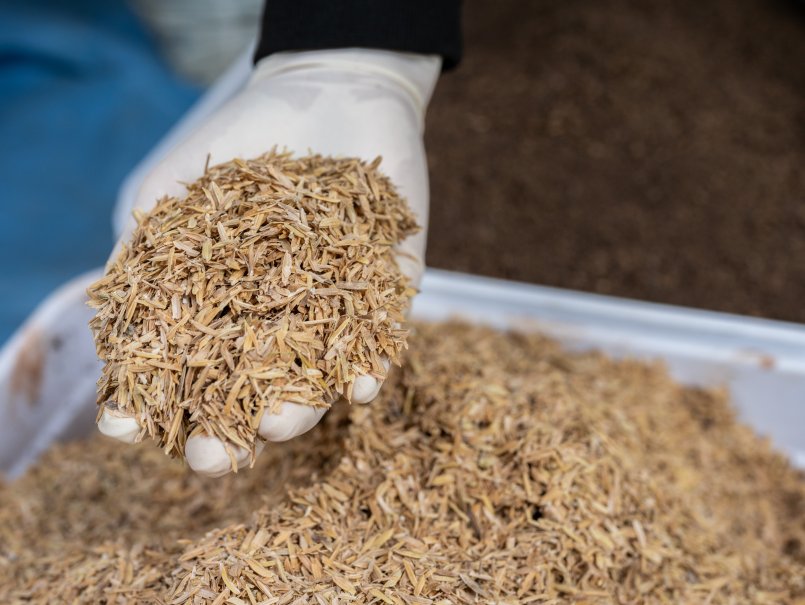
A key element in this process is biochar, material obtained from agri-food waste such as rice husks. Thanks to its high porosity and conductive ability, this material allows to immobilize the enzyme and facilitate its connection to the electrical system.
“Biochar can appear as common ash, but it has properties that make it the ideal support and conductor. It allows us to connect the enzyme to the electric current so it can carry out the reaction”, Ottone stated.
“Unlike traditional methods, that tend to require high temperatures or pressure, this technology operates in environment-friendly conditions. The use of biodegradable and highly specific enzymes, reduces both the energetic consumption and the environmental impact of the process”, the scholar explained.
In addition, the system is designed to optimize resources, since immobilizing the enzyme in the biochar allows to protect and reuse it, which contributes to reducing costs and improving the efficiency of the process.
For the scholar, this type of development is part of a broader challenge. “Facing climate change requires to move forward in multiple fronts. On one side, we need to recover natural ecosystems and their regeneration capacity; on the other, we need to encourage low impact green technologies. From biotechnology, we can make substantial contributions to this second line”, she noted.
In the same direction, the conversion of CO₂ in useful products is not proposed as the sole solution, but a piece within a group of strategies that are necessary to advance towards a more sustainable future.
By Camila Rojas
Strategic Communication Department